Driving Sustainability Forward: How Modern Dealership Design Is Evolving
Sustainability in automotive retail is no longer a niche ambition; it’s becoming a defining feature of forward-thinking dealership design. At Penney Design Group, we’ve seen firsthand how evolving client priorities, brand standards, and site constraints are shaping a new generation of high-performance, environmentally conscious facilities. Across our portfolio, sustainability takes many forms: from certified green buildings to innovative site strategies, operational efficiencies, and long-term performance considerations.
Rethinking the Dealership Footprint
One of the most impactful shifts in dealership design is the move toward vertical integration. Projects like Audi Bethesda and BMW of Rockville demonstrate how building upward, rather than outward, can significantly reduce land use while maintaining full program requirements.
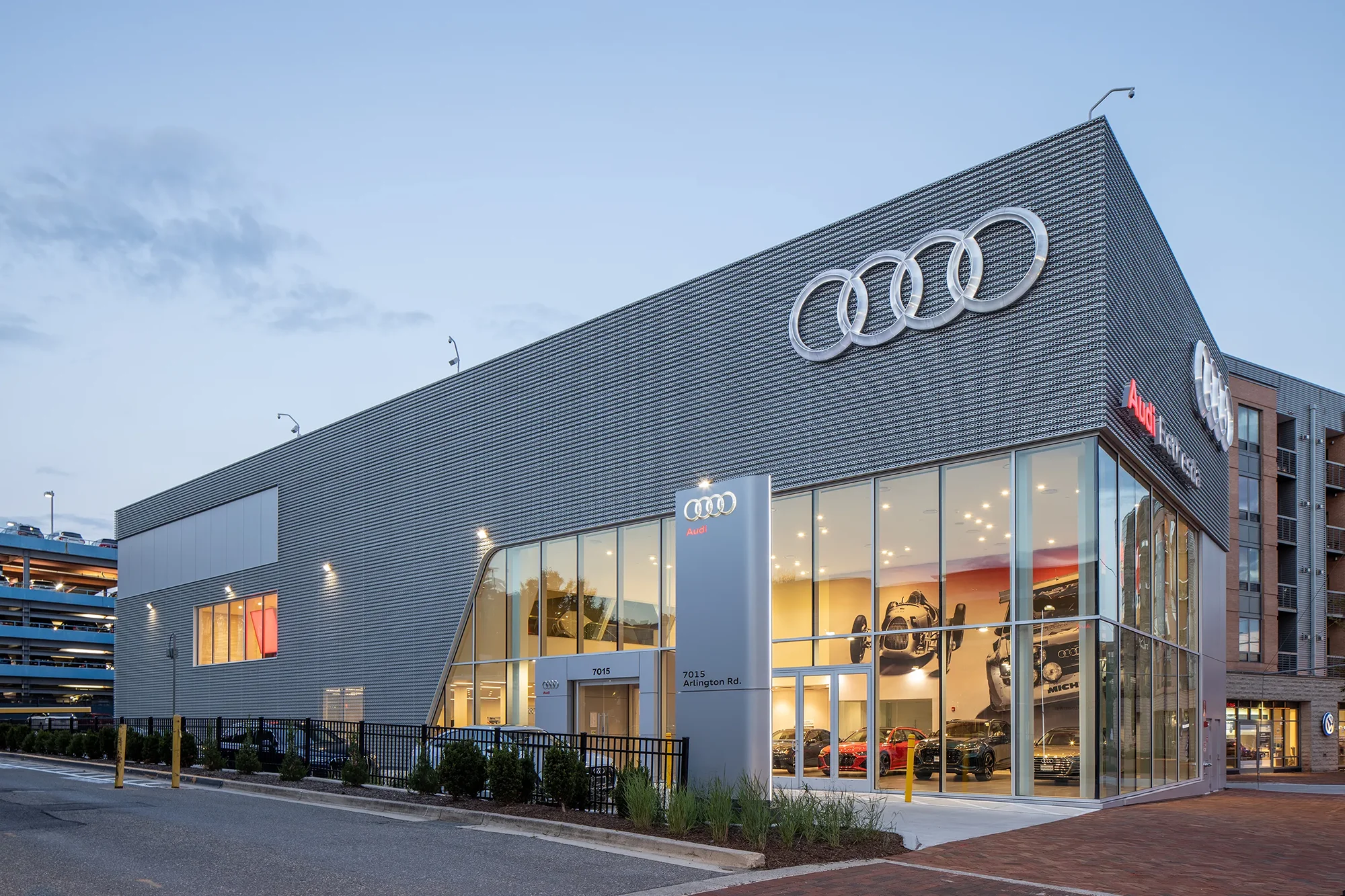
Audi Bethesda’s three-story configuration consolidates showroom, office, and vehicle display into a compact urban footprint, maximizing natural light and spatial efficiency. The materials chosen help with increasing indoor air quality and reduce VOC off gassing. The project also aligns with broader Audi dealership design standards, which emphasize daylighting, spatial efficiency, and reduced energy use through their “terminal” concept.
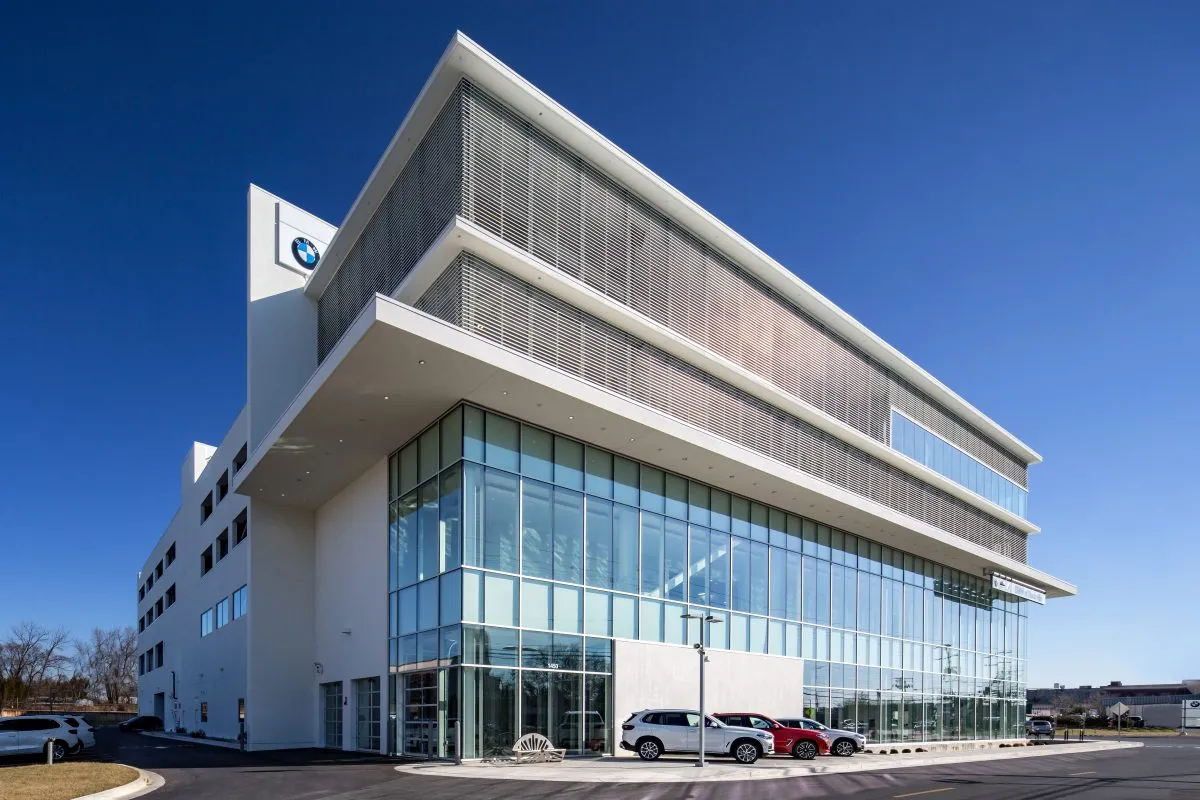
Similarly, BMW of Rockville’s five-story facility integrates sales, service, and inventory parking into a single vertical structure. In addition, the project consolidated multiple dealership operations into one location, reducing redundant building systems and improving overall operational efficiency. While neither project pursued formal LEED certification, BMW Rockville did comply with International Green Construction code, and both reflect sustainable principles through land optimization, reduced site disturbance, and efficient space planning.
Brand Innovation Meets Sustainable Strategy
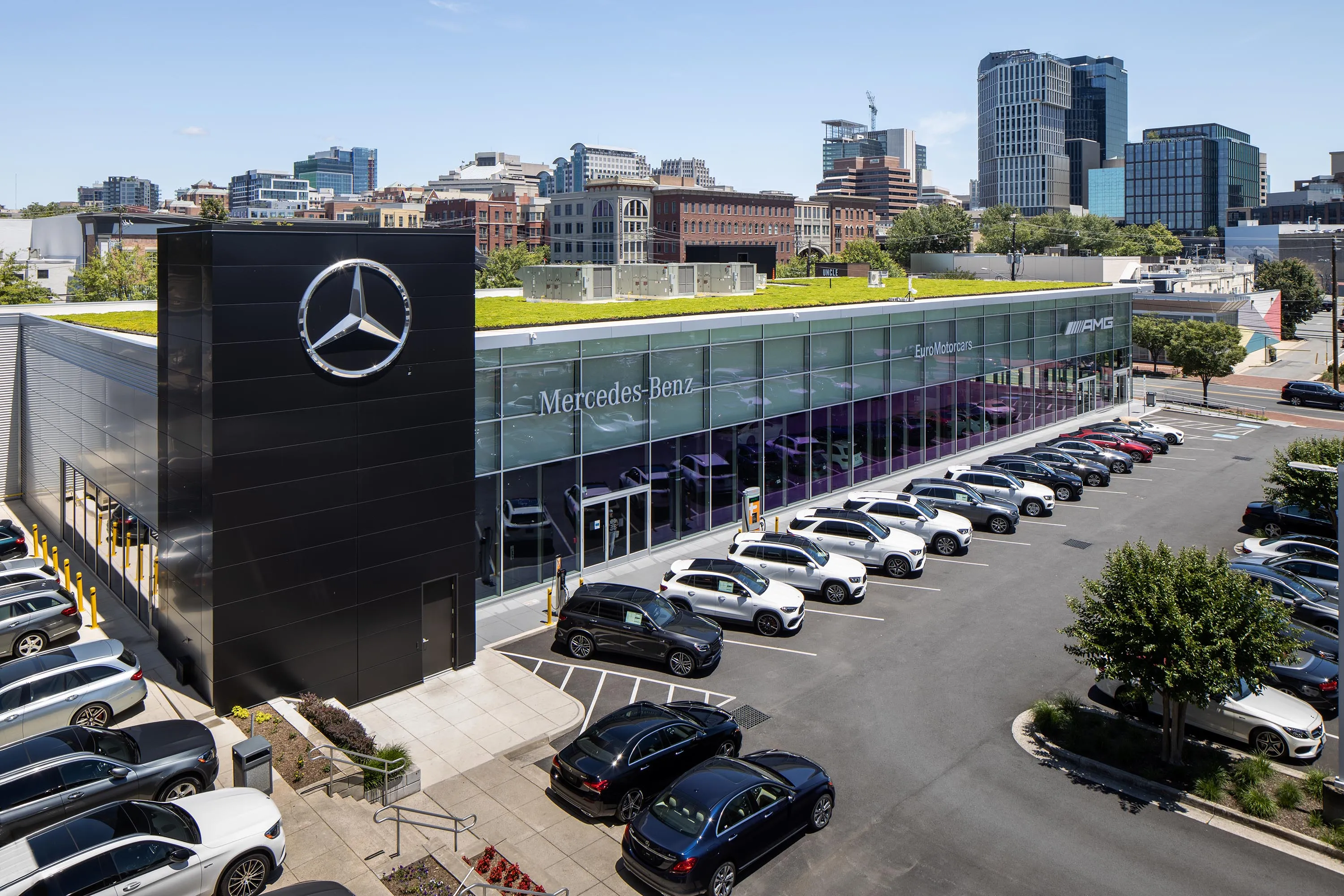
Luxury brands are increasingly embedding sustainability into their architectural identity. Mercedes-Benz of Bethesda, as the first U.S. implementation of the AH3 design concept, represents a shift toward modernized retail environments that prioritize efficiency and customer experience. This project was a partial demo and rebuild with a reduced footprint by approximately 4,000 SF, as well as a fool renovation. The rooftop boasts a 13, 768 SF green roof; these changes signal how adaptive reuse and thoughtful expansion can extend building life cycles, an often overlooked aspect of sustainability.
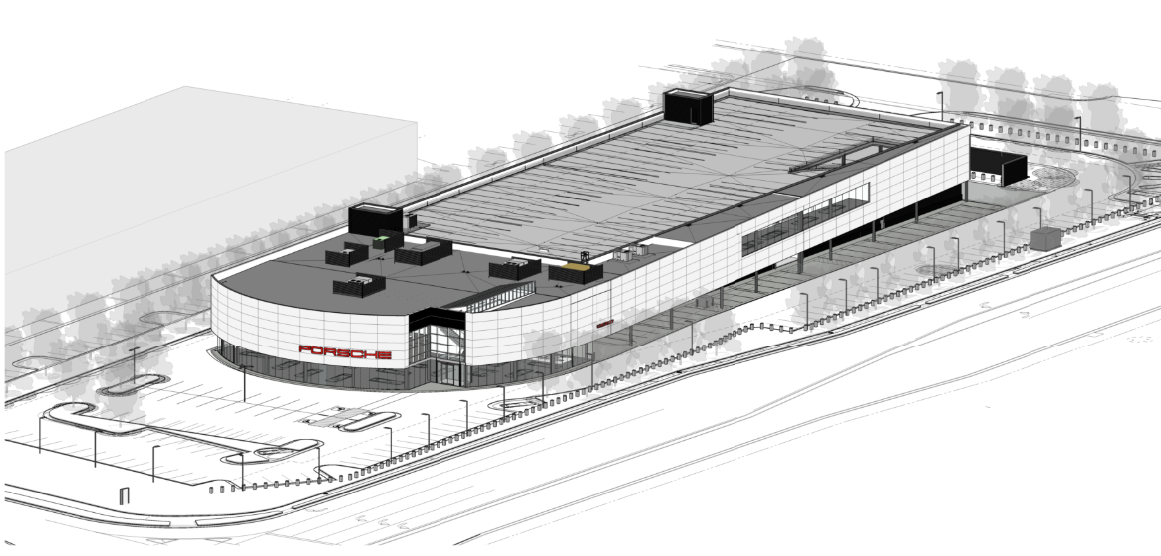
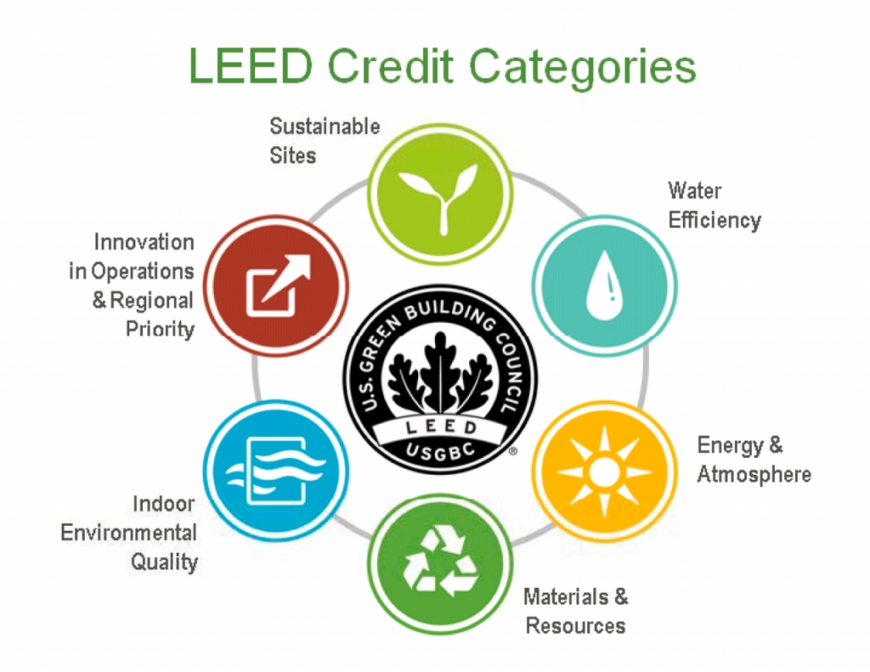
Porsche facilities further illustrate this evolution. While not all projects pursue certification, many incorporate sustainable strategies aligned with LEED standards. Porsche Tysons Corner and Porsche Chantilly respond to dense, high-value sites with innovative solutions like multi-level parking and integrated building systems. Notably, Porsche Chantilly achieved LEED BD+C certification, combining a large-scale dealership program with environmentally responsible construction and site development.
Beyond LEED: Expanding the Definition of Green
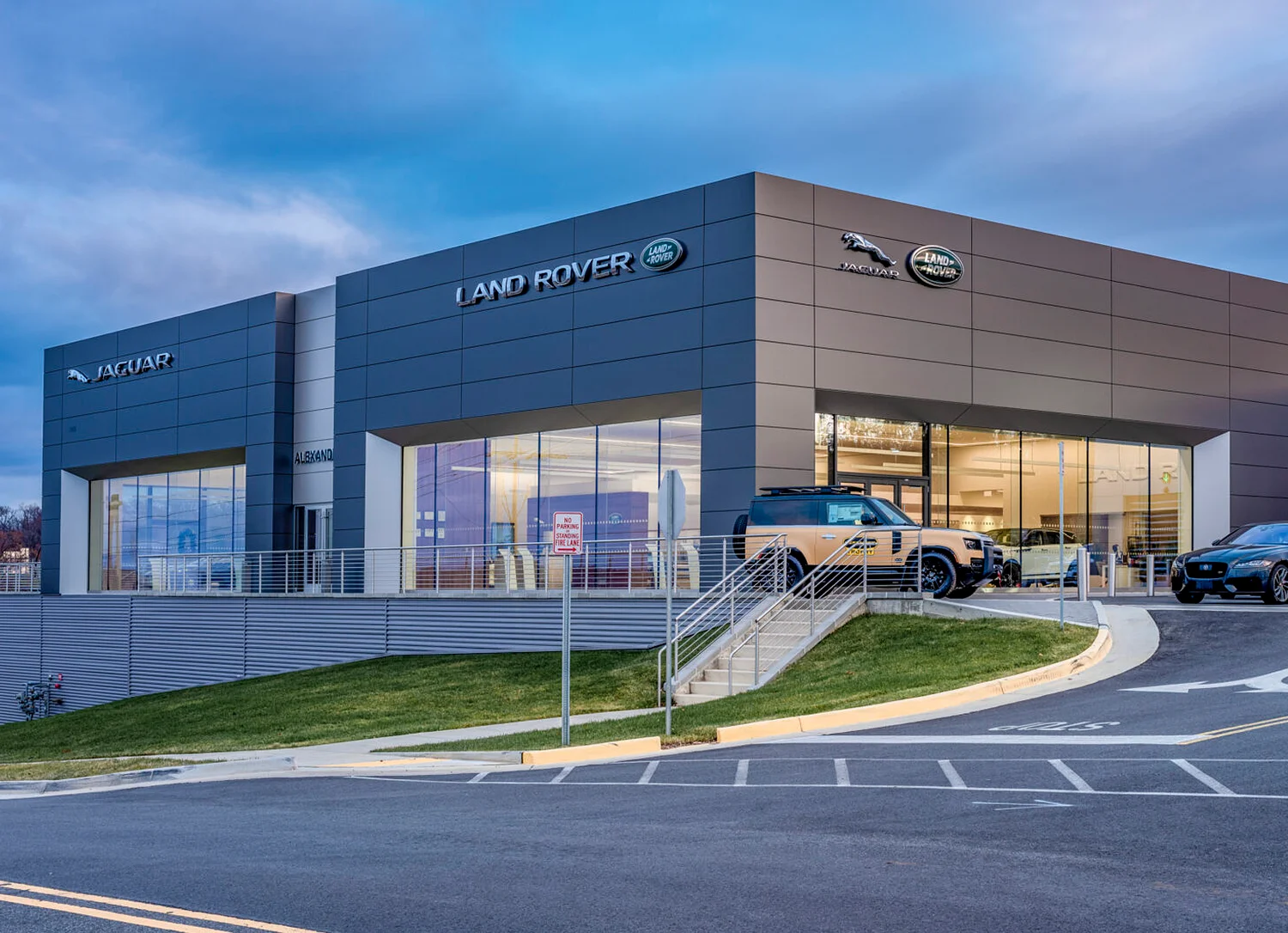
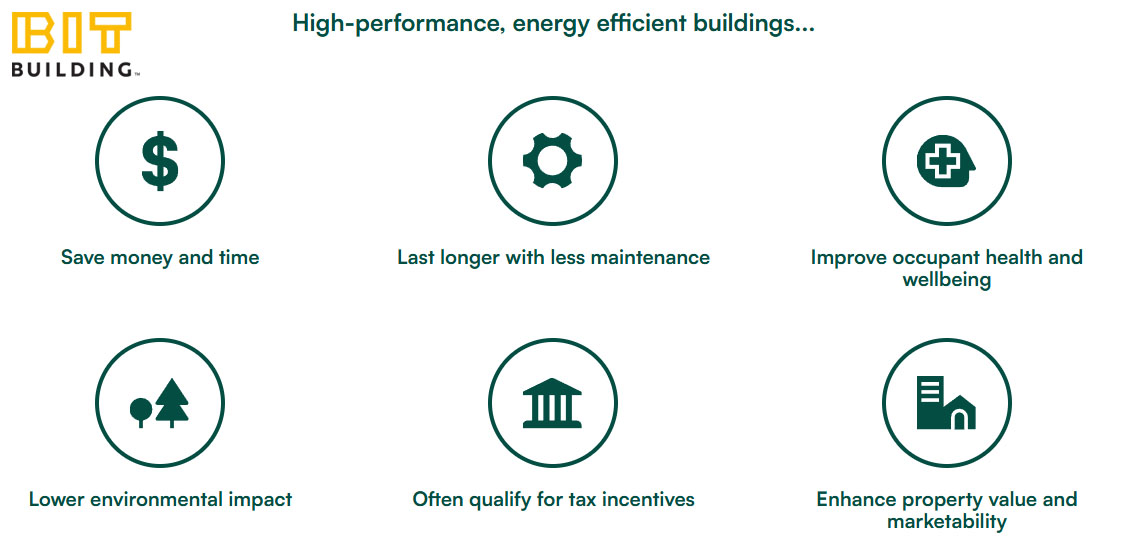
Sustainability isn’t limited to LEED certification, and some projects are pushing beyond it. The Jaguar Land Rover dealership in Alexandria offers a compelling example. As the first auto dealership to achieve BIT (Building Improvement Toolkit) certification through the Southface Institute, the project reflects a broader approach to sustainability, one that prioritizes long-term operational performance alongside construction practices.
By selecting BIT certification over more traditional frameworks, the project team aligned sustainability goals with real-world dealership operations, targeting measurable reductions in energy use and utility costs. This approach underscores an important shift toward lifecycle-based sustainability, where building performance over time is just as critical as initial design and construction.
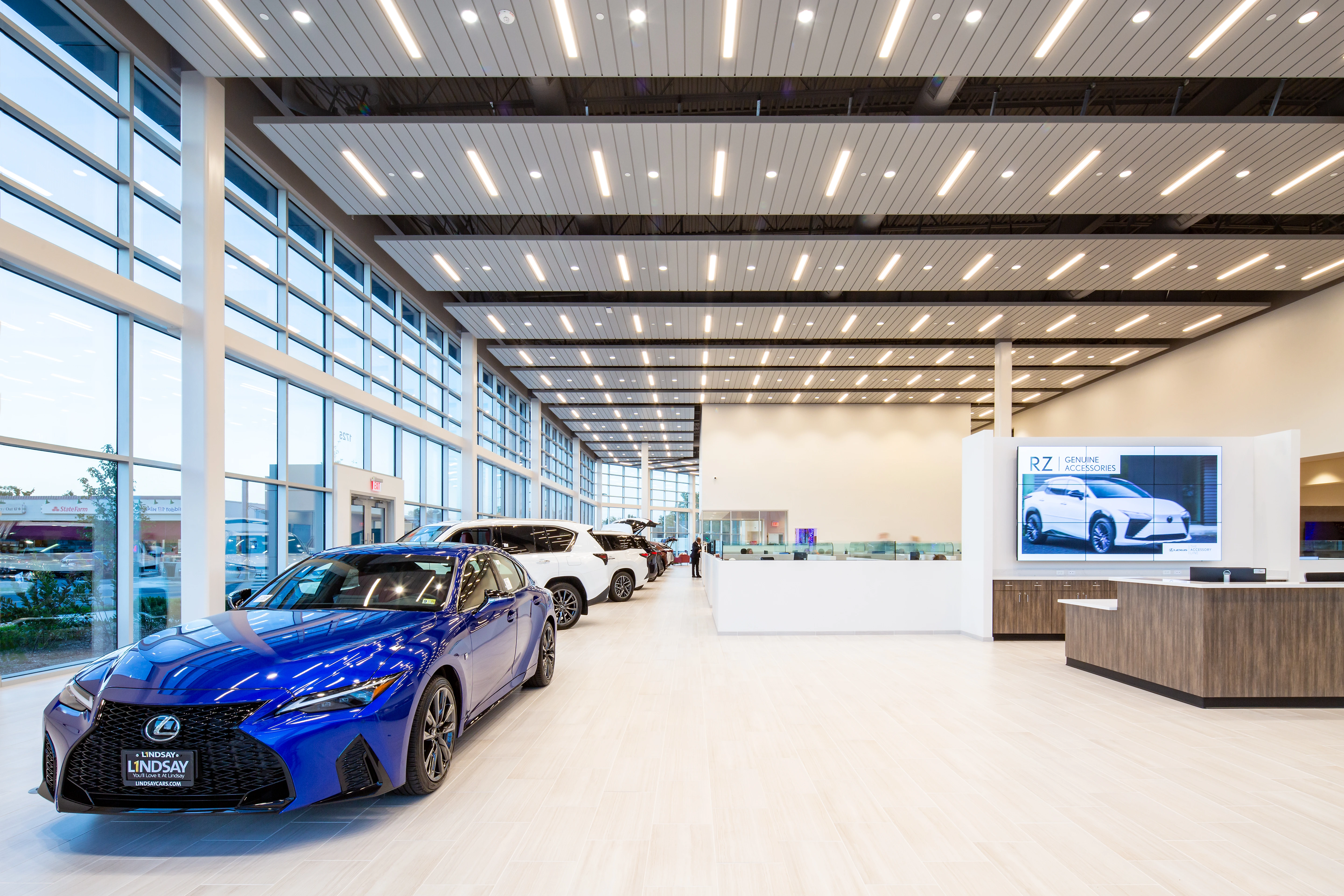
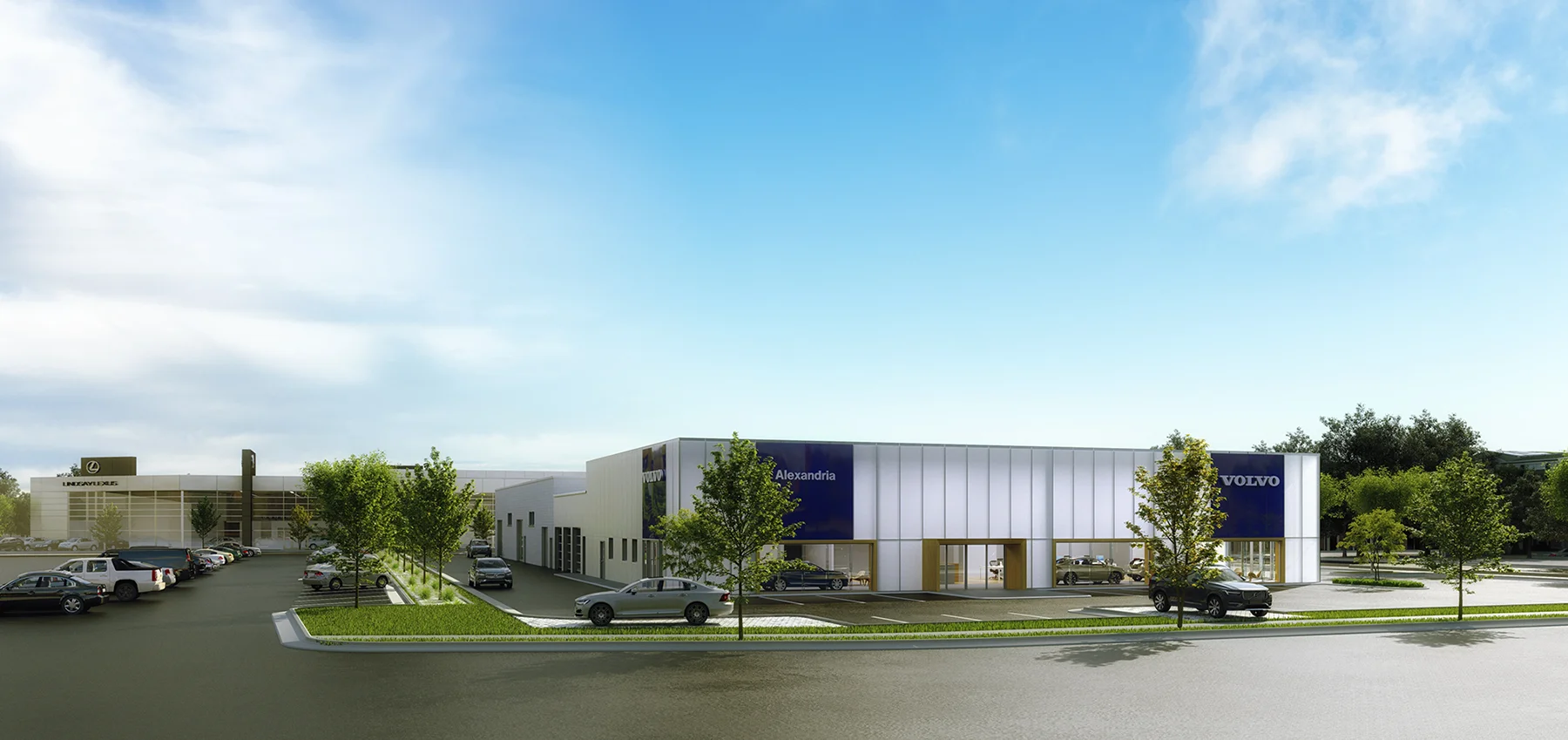
This broader definition of sustainability is also evident in the Lindsay Lexus Volvo Campus in Alexandria, which was designed to meet LEED Silver standards. The campus is comprised of three buildings that align with LEED Silver principles, but what distinguishes the project is its sensitivity to the surrounding residential context. Rather than presenting as a typical spread of separate dealership structures, the design employs strategies such as stacked underground parking, vertically integrated service departments, and a green roof to reduce the overall site impact and mitigate heat island effects. Site lighting was designed to provide minimal disruption to neighboring buildings. This approach demonstrates how sustainable design can extend beyond building systems and materials to include thoughtful site integration and community responsiveness.
More broadly, this reflects an industry-wide movement toward future-ready facilities. Increasingly, dealerships are being designed to accommodate evolving technologies such as electric vehicle infrastructure, energy-efficient systems, and adaptable service environments that reduce the need for future retrofits.
Transforming Challenging Sites into Community Assets
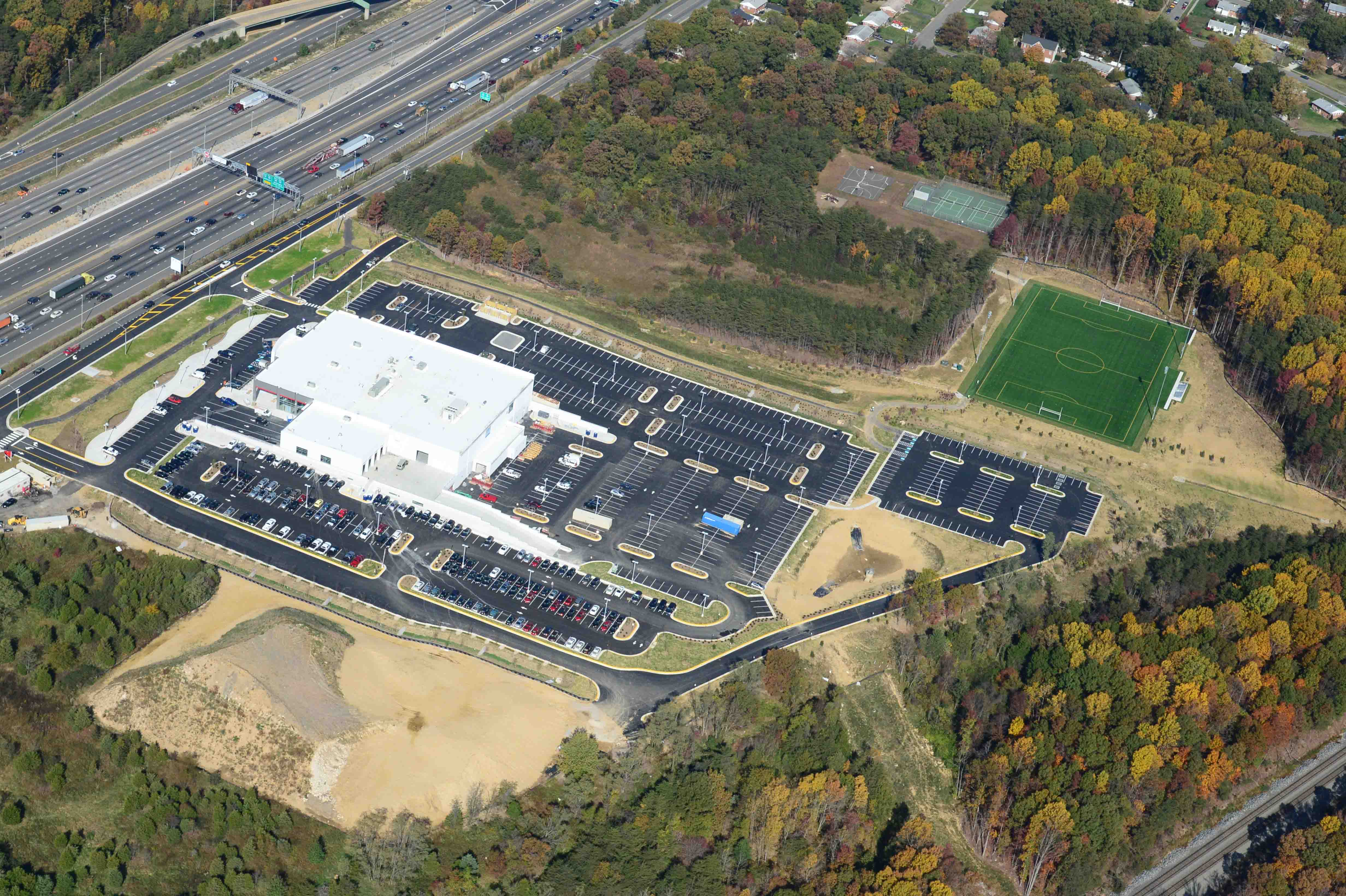
Sustainable design also means making smart use of previously underutilized or environmentally compromised land. The Priority Toyota dealership in Springfield exemplifies this approach and was on the leading edge of LEED implementation; designed in 2012 with construction completed in 2015. Built on a remediated landfill site, the project achieved LEED Gold certification in 2017 while transforming a brownfield into a vibrant commercial and community space.
In addition to its environmental achievements, the development contributed to a turf soccer field for the local community, highlighting how dealership projects can deliver broader social value alongside environmental performance.
The Future of Sustainable Dealership Design
Across these projects, a clear pattern emerges: sustainability in dealership design is multifaceted. It includes certification programs like LEED and BIT, but also extends to site strategy, vertical design, adaptive reuse, operational efficiency, and long-term building performance.
At Penney Design Group, we approach each project with a tailored mindset, balancing brand standards, site constraints, and sustainability goals to create high-performing facilities that are built for the future. As the automotive industry continues to evolve, too will the spaces that support it. Increasingly, those spaces will be defined not just by how they look, but by how responsibly they perform.