From Sketch to Space: Why Design Starts by Hand
Before a project becomes a set of construction drawings, a rendering, or a polished presentation, it begins somewhere quieter: on trace paper.
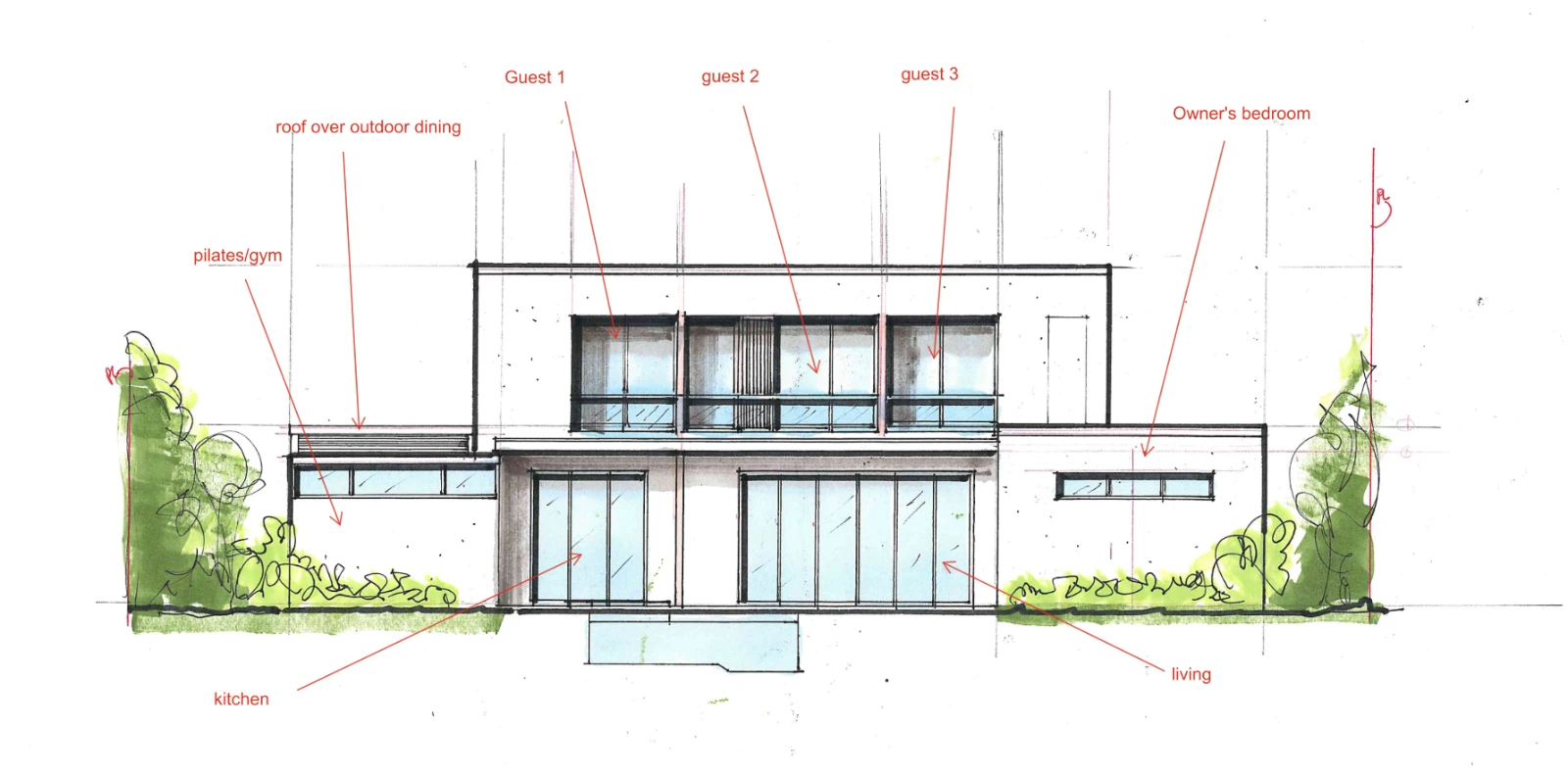
At Penney Design Group, sketching is not nostalgia or decoration; it is a critical design tool. Hand drawing allows architects to think freely, test ideas quickly, and explore relationships that are difficult to discover when starting directly in software. Good buildings and interiors do not begin as construction documents: they begin as conversations between hand, eye, and imagination.
The early sketches for the NAR art studio illustrate this perfectly. The drawings are not about perfection; they are about discovery. In these studies, the design team works through circulation, storage, sightlines, and daily use long before anything is locked into CAD. Elements like sliding panels, millwork organization, and flexible work zones emerge through sketching as designers ask: How will this space actually function?
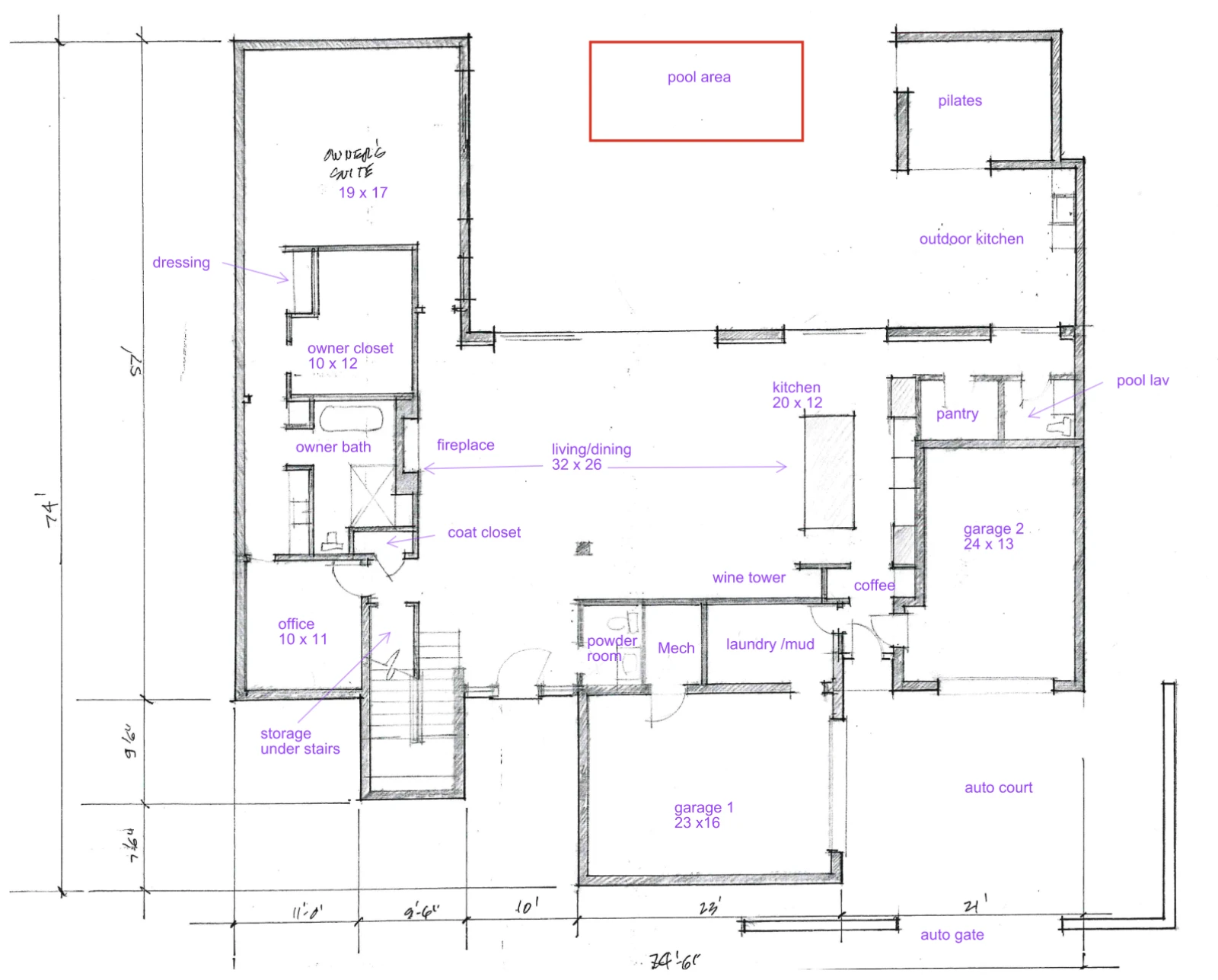
Sketching as Problem-Solving
Freehand drawings are less about drafting and more about thinking. They allow designers to test spatial relationships, adjacencies, proportions, and ergonomics in real time. When working by hand, architects can shift elements, exaggerate ideas, or layer multiple options on a single sheet without the friction of software constraints.
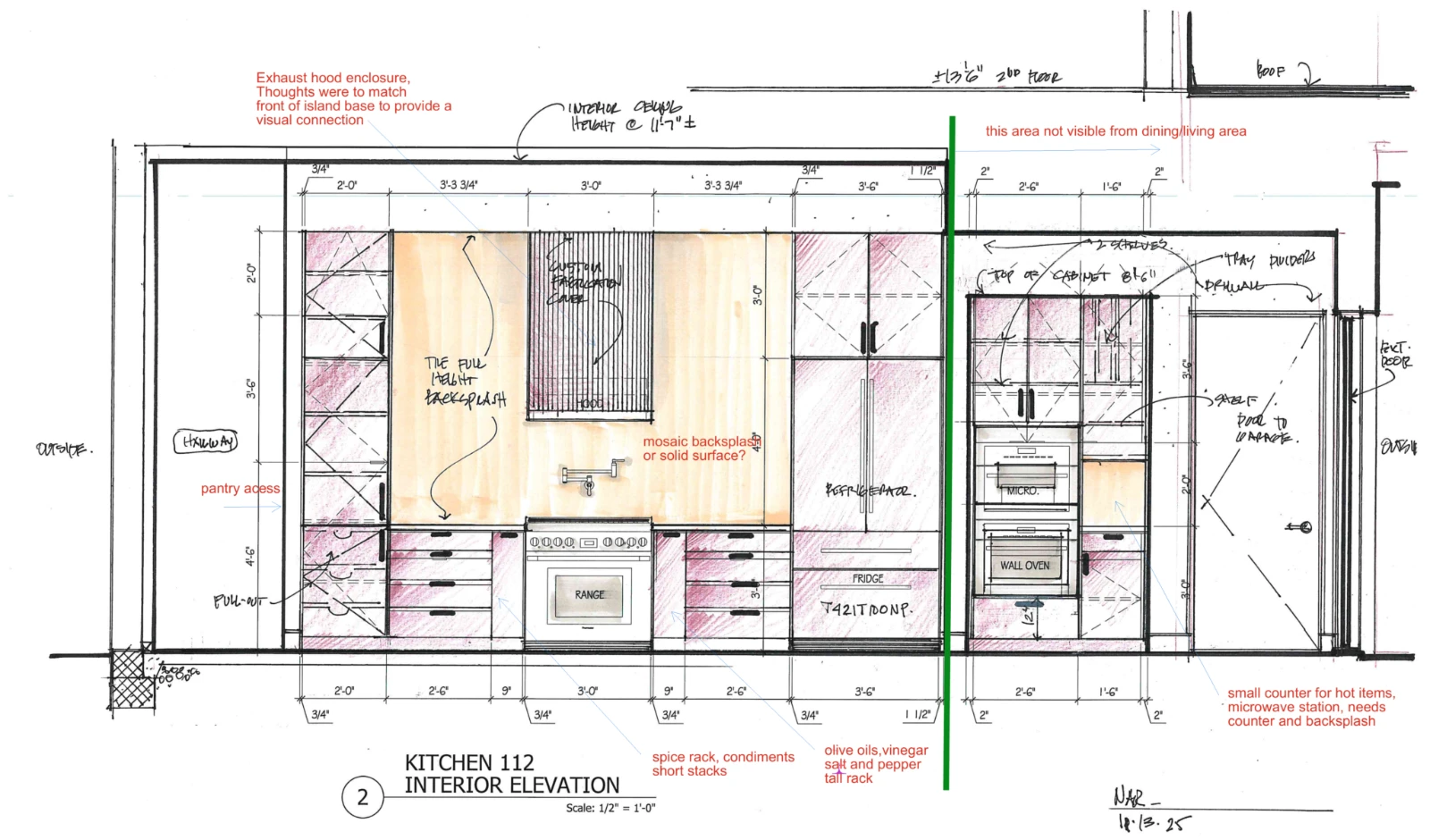
In the NAR kitchen studies, for example, early sketches explore how a back wall should operate visually and functionally. Decisions about pantry access, appliance placement, and material continuity are explored simultaneously. The exhaust hood enclosure is intentionally aligned with the island face to create visual cohesion; an idea that emerges clearly in sketch form before it becomes a precise digital detail.
NAR kitchen backwall
These drawings capture design intent: balance, hierarchy, and rhythm. They communicate the why behind the layout, not just the dimensions.
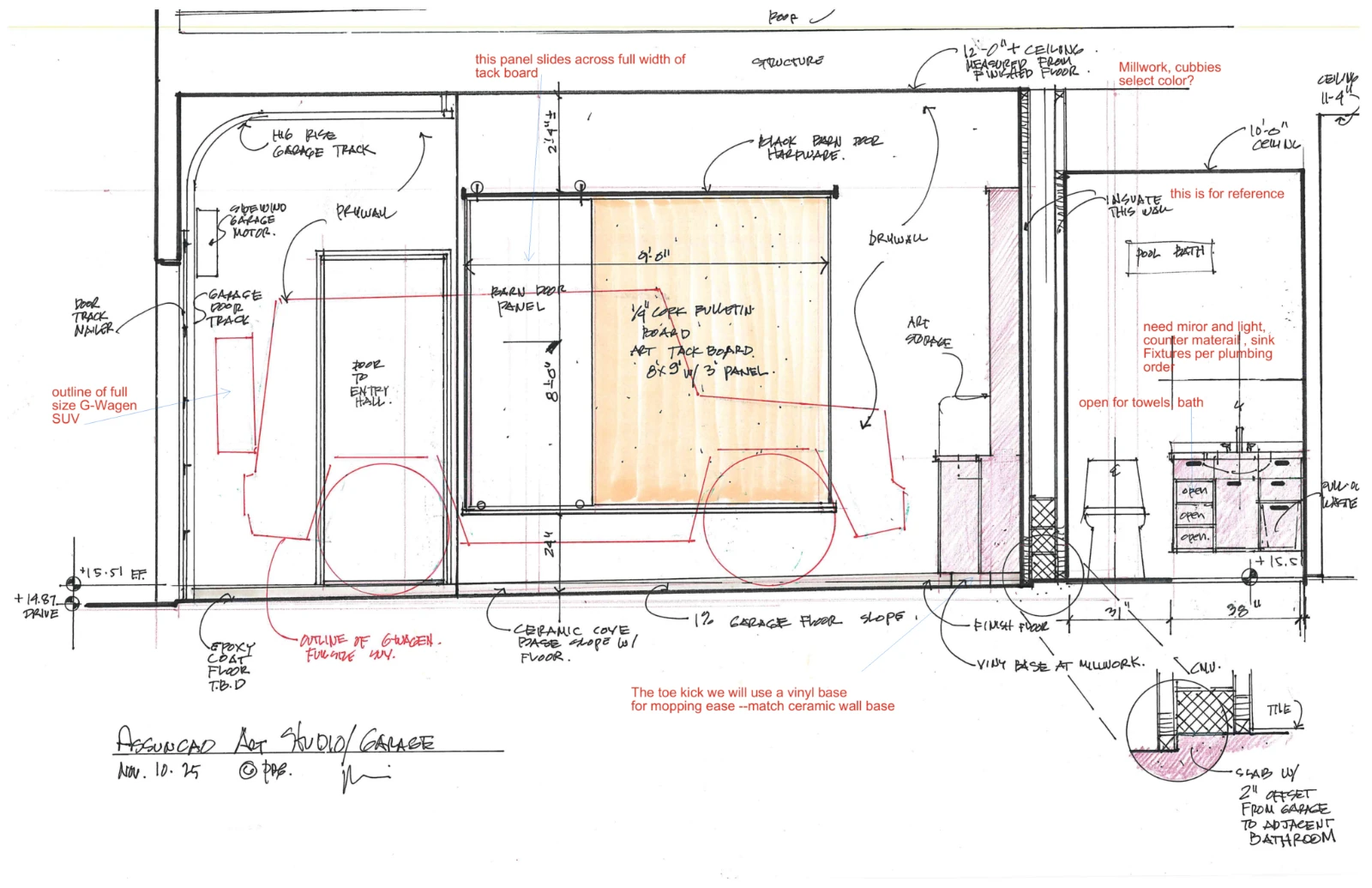
Details Are Designed, Not Assembled
Hand drafting is equally important at the detail scale. Cabinetry reveals, toe kicks, backsplash transitions, and panel systems are not arbitrary; they are designed relationships between materials.
The island elevation studies show how even a single millwork element benefits from early exploration. Edge profiles, waterfall conditions, and alignment of drawers and panels are worked out through quick, iterative sketches. By resolving these ideas early, the design team understands how materials meet and terminate before translating the concept into formal construction details.
This process prevents the common mistake of assembling details reactively. Instead, every component is part of a deliberate visual language.
Early Sketching Reduces Downstream Revisions
Time invested in sketching saves time later. Working through layouts, storage logic, and user ergonomics by hand resolves many issues before they reach the construction document phase. When a design has been tested conceptually, the transition to AutoCAD and Revit becomes a process of documentation rather than discovery.
The result is clearer production drawings, fewer revisions during construction, and stronger coordination between disciplines. Sketching is not an extra step; it is a risk-reduction strategy.
A Tool for Collaboration
Hand sketches are also powerful communication tools. They are intuitive and accessible in a way that highly resolved digital drawings often are not. Clients, contractors, and consultants can read a sketch quickly and respond to the idea rather than getting distracted by finish-level precision.
Because sketches feel flexible, they invite conversation. They signal that the design is evolving and that feedback is welcome.
Not Everything Needs to Be Perfect
The value of a sketch lies in its openness. These drawings are working documents: places to test ideas, ask questions, and note assumptions. They allow architects to think without prematurely locking decisions into a rigid format.
Perfection comes later; exploration comes first.
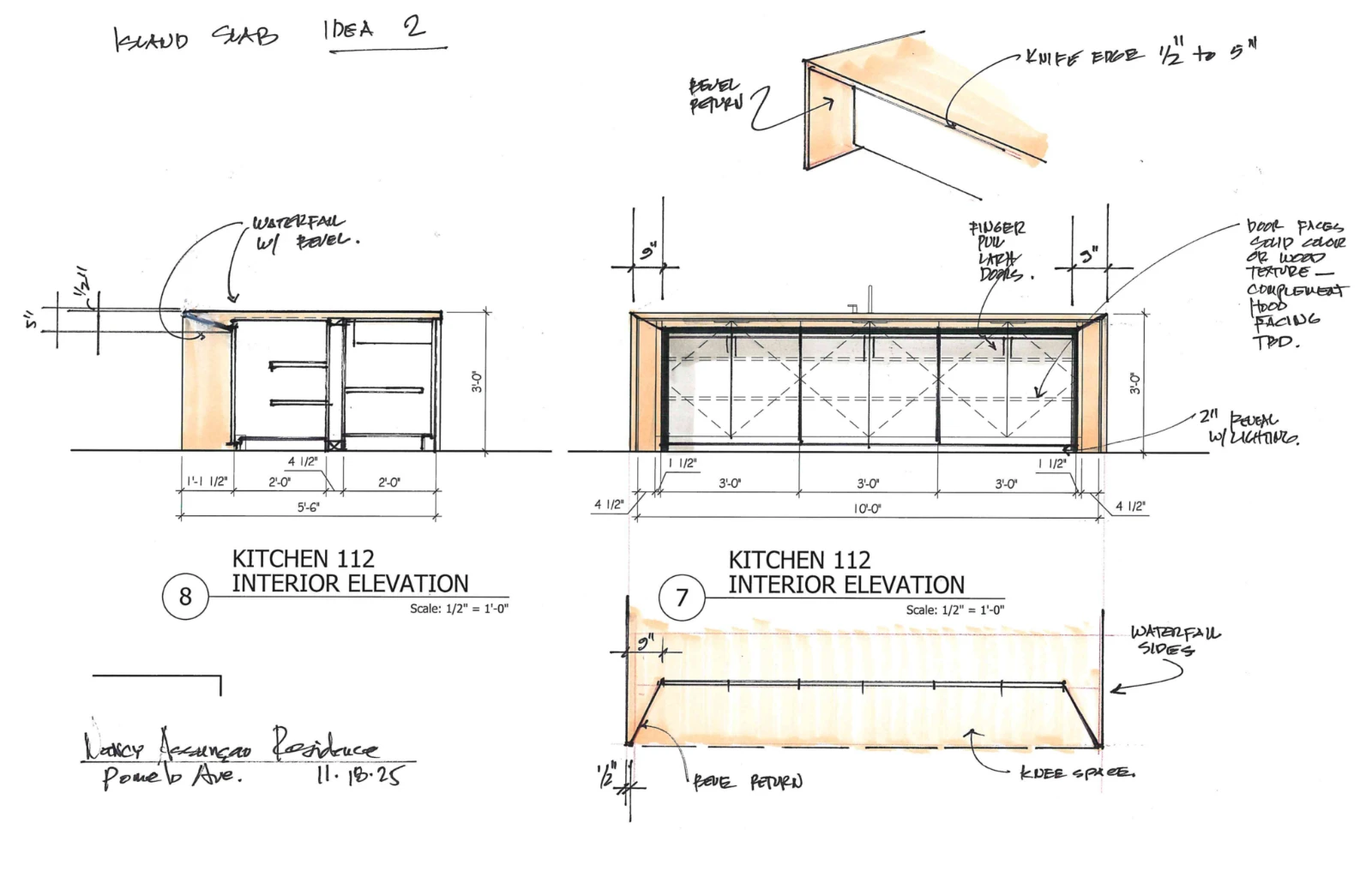
From Sketch to Construction
Hand sketches are not an alternative to construction drawings; they strengthen them.
In early design phases; freehand studies allow architects to test spatial flow, material relationships, and functional logic quickly. Once the design intent is clear, these ideas are translated into fully coordinated AutoCAD and Revit documents where dimensions are finalized, systems are aligned, and details are documented with the precision required for permitting and construction.
By investing in sketching upfront, the construction drawings that follow are more intentional, efficient, and coordinated; resulting in fewer revisions and a finished project that reflects the original design vision.