

Every successful project begins with a clear design vision; turning that vision into a buildable, durable, and client-approved reality takes strategy, collaboration, and expertise. Within an architecture firm, interior designers play a critical role in bridging conceptual ideas with real-world application. From early inspiration through detailed finish selection, interior design is integral to shaping how a space looks, feels, and performs.
At Penney Design Group, interior design is fully integrated into our architectural practice. While we are widely recognized for automotive architecture, our work spans many facets of commercial and residential design, including multifamily, workplace, retail, and mixed-use projects. Across all project types, the same design principles apply; thoughtful coordination, material integrity, and a strong conceptual foundation.
Interior Design Within an Architecture Practice
In an integrated architecture and interior design environment, designers are involved from the earliest stages of a project. Rather than applying finishes at the end of the process, interior designers work alongside architects to help define the overall design concept; ensuring that interior materials, colors, and textures reinforce the architectural intent.
This collaborative approach allows design decisions to respond directly to building form, program, brand identity, and user experience. Whether the project is a commercial showroom, a multifamily residential building, or a private interior, the goal is always cohesion; spaces that feel intentional, functional, and aligned with the client’s vision.
Establishing the Design Concept
Concept development begins with understanding context; who the client is, how the space will be used, and what the project needs to communicate. Interior designers translate these inputs into a design direction that balances aesthetics with performance requirements such as durability, maintenance, acoustics, and budget.
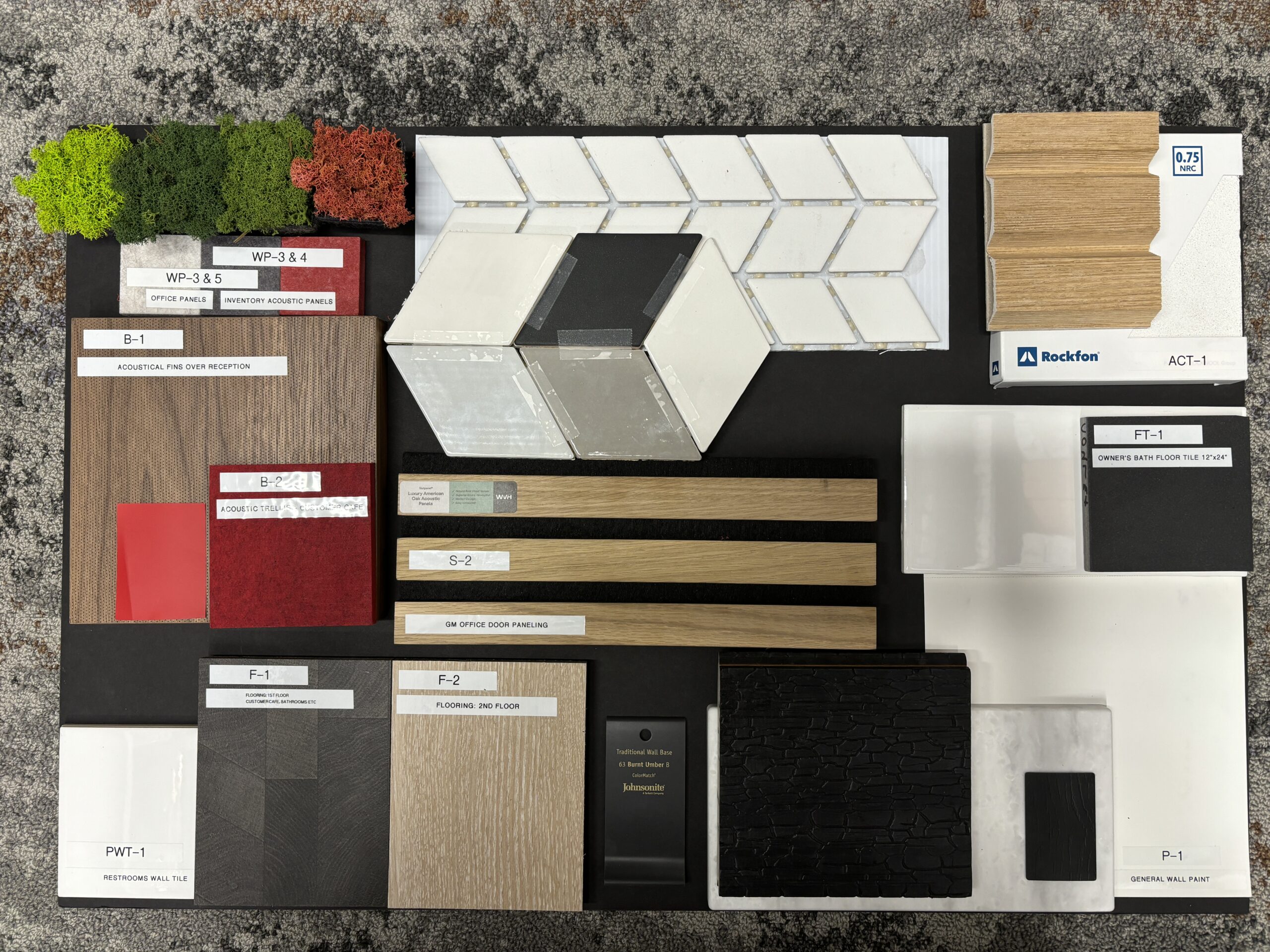
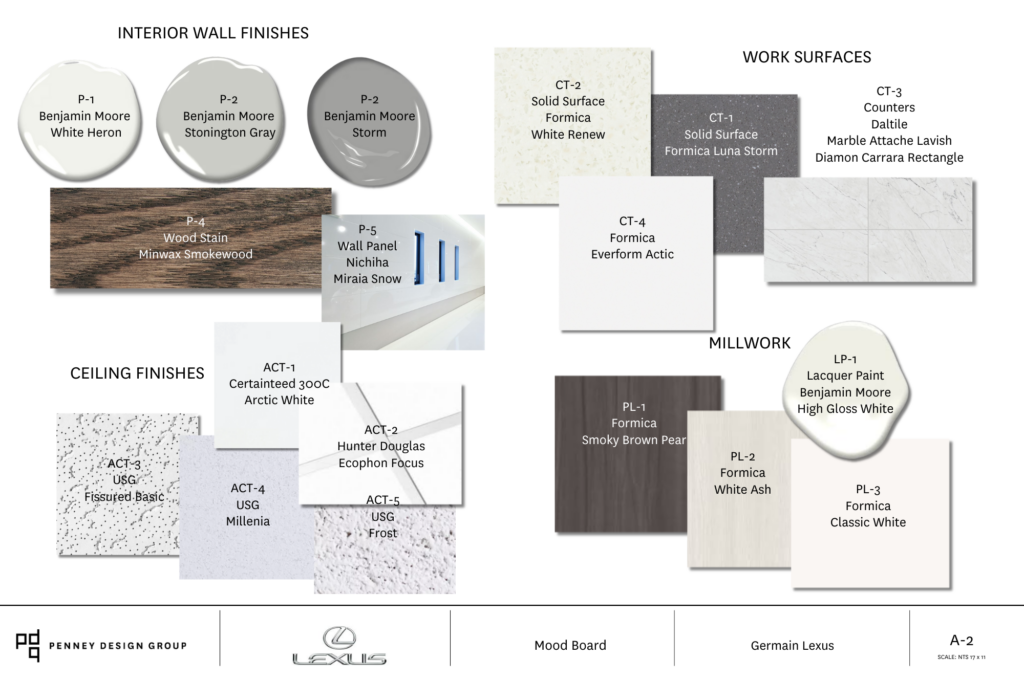
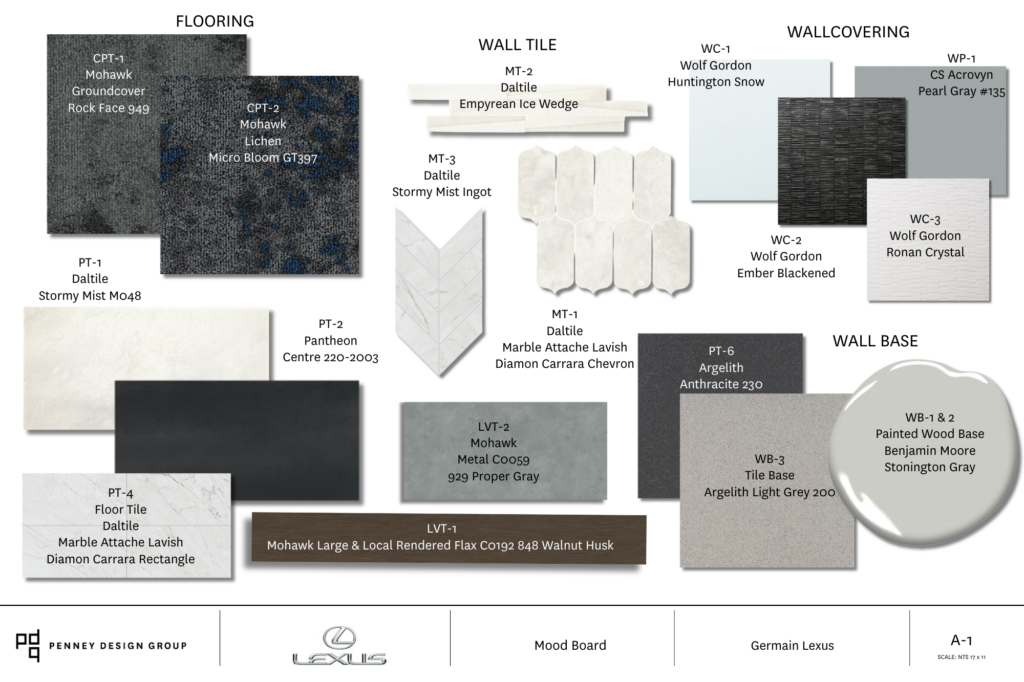
Mood boards and finish palettes become essential tools at this stage. They allow the team to explore material relationships, contrast, and tone while testing how individual elements work together as a system rather than in isolation. Flooring, wall finishes, ceilings, millwork, and work surfaces are all considered together to ensure consistency throughout the space.
Selecting Finishes with Purpose
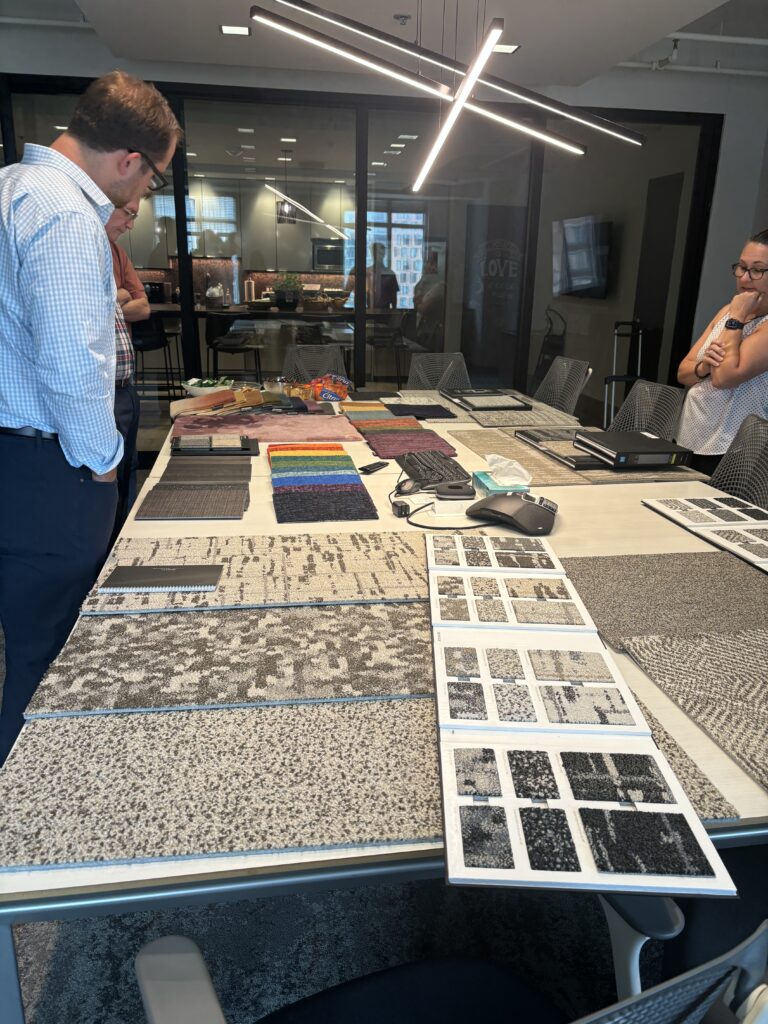
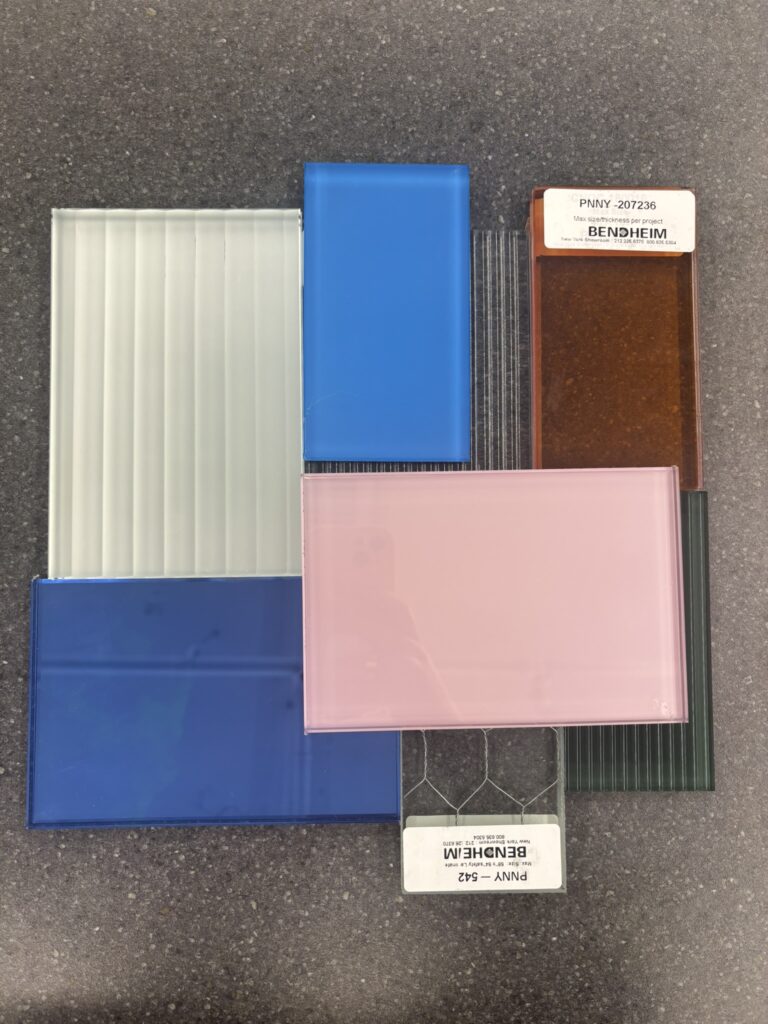
Finish selection is both creative and highly technical. Interior designers evaluate materials not only for appearance, but also for longevity, constructability, and suitability for specific environments. High-traffic flooring must balance visual interest with durability; wall finishes may be selected to enhance acoustics, add texture, or support branding.
Within an architecture firm, these selections are coordinated closely with detailing, specifications, and construction documentation. Designers consider transitions between materials, alignment with building systems, and how finishes will be installed and maintained over time. This level of coordination helps minimize surprises during construction and ensures the finished space reflects the original design intent.

From Concept to Construction
A strong design concept serves as a roadmap throughout the life of a project. As drawings are developed and refined, interior designers continue to collaborate with architects, consultants, and clients; answering questions, refining details, and adapting as needed while maintaining the core vision.
The result is a space where materials, colors, and textures work together seamlessly; supporting both form and function. By integrating interior design into the architectural process from the start, Penney Design Group is able to move confidently from vision to viability; delivering interiors that are thoughtful, durable, and aligned with each project’s goals.