

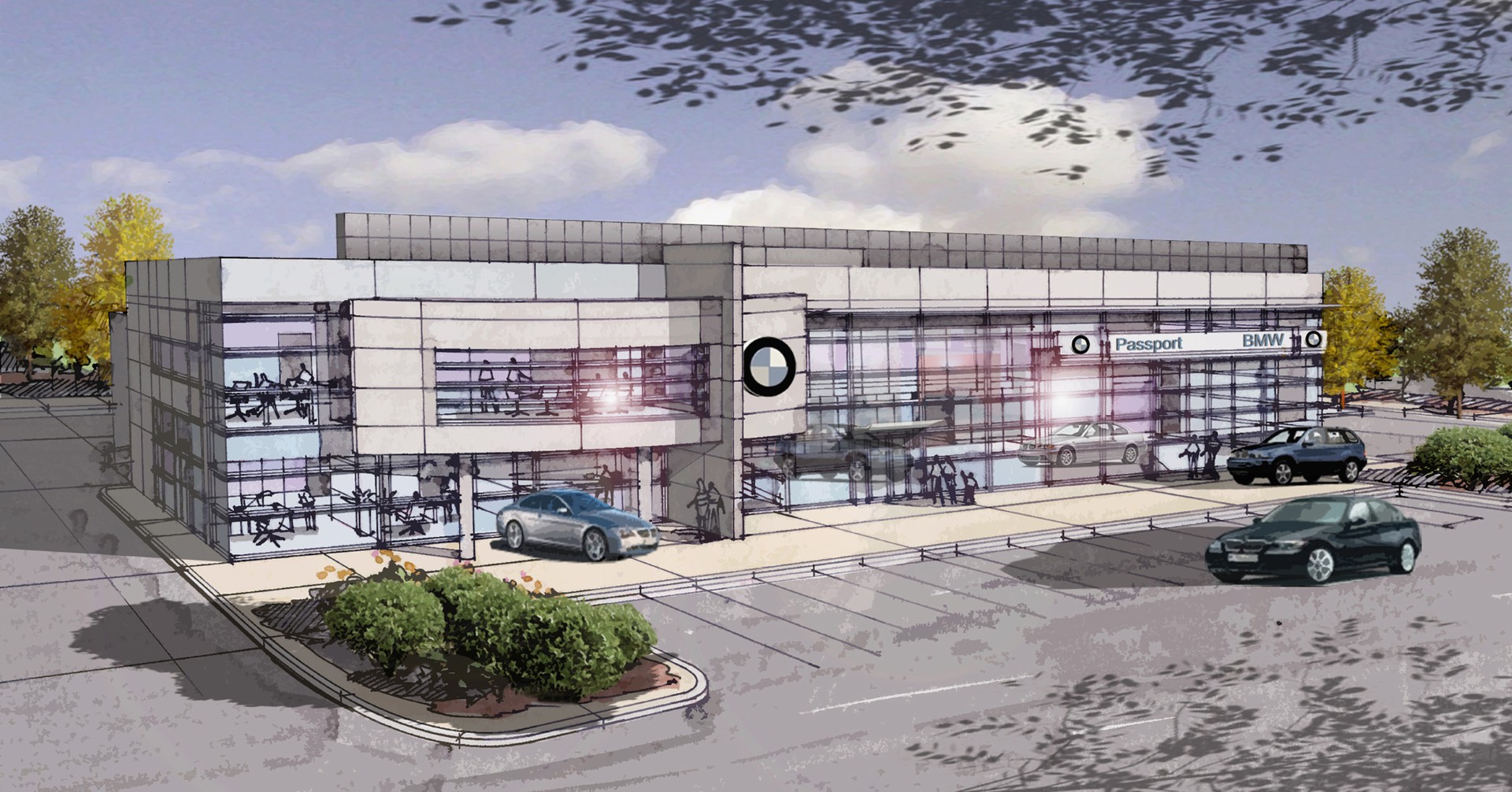
Penney Design Group is proud to have partnered on the Passport BMW dealership renovation and addition, a project that redefined the customer experience while expanding the facility to meet evolving operational needs. Located in the Washington, DC metro area, this project balanced precision construction, thoughtful phasing, and brand-driven design within an active dealership environment.
Project Scope
The project consisted of a comprehensive renovation of all customer-facing areas along with a 25,000-square-foot building addition. The scope included upgrades to the showroom, customer lounges, sales offices, and service reception areas with modernizing finishes, improving circulation, and enhancing overall functionality. The new addition allowed the dealership to expand its footprint while maintaining continuity with the existing structure and BMW’s architectural standards.
Throughout design and construction, careful coordination was required to integrate new building systems and structural elements into the existing facility while preserving daily dealership operations.
Construction Process & Key Challenges
Constructing an addition and executing major renovations within an occupied automotive facility presents unique challenges. Phasing and sequencing were critical to ensure customer access, vehicle flow, and service operations could continue safely and efficiently throughout construction.
Early phases focused on structural work for the addition, including steel erection and masonry construction, establishing the framework for the expanded facility. As the building enclosure progressed, interior construction advanced in parallel—allowing renovation work to occur while minimizing disruption to dealership functions.
Interior renovations required close coordination across disciplines, integrating updated mechanical, electrical, and lighting systems with new architectural finishes. Attention to detail was essential to meet both performance requirements and the refined aesthetic expected in a premium automotive environment.
The final stages of construction brought together interior finishes, exterior improvements, and site work by culminating in a seamless transformation that supports both customer experience and operational efficiency.
Material Strategy Aligned with BMW Brand Standards
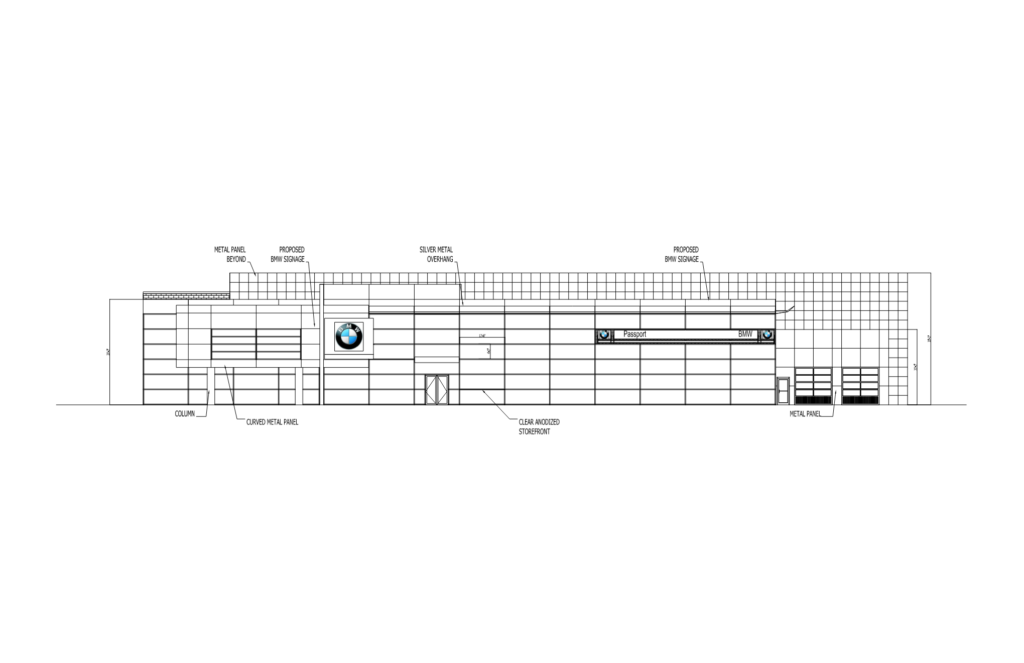
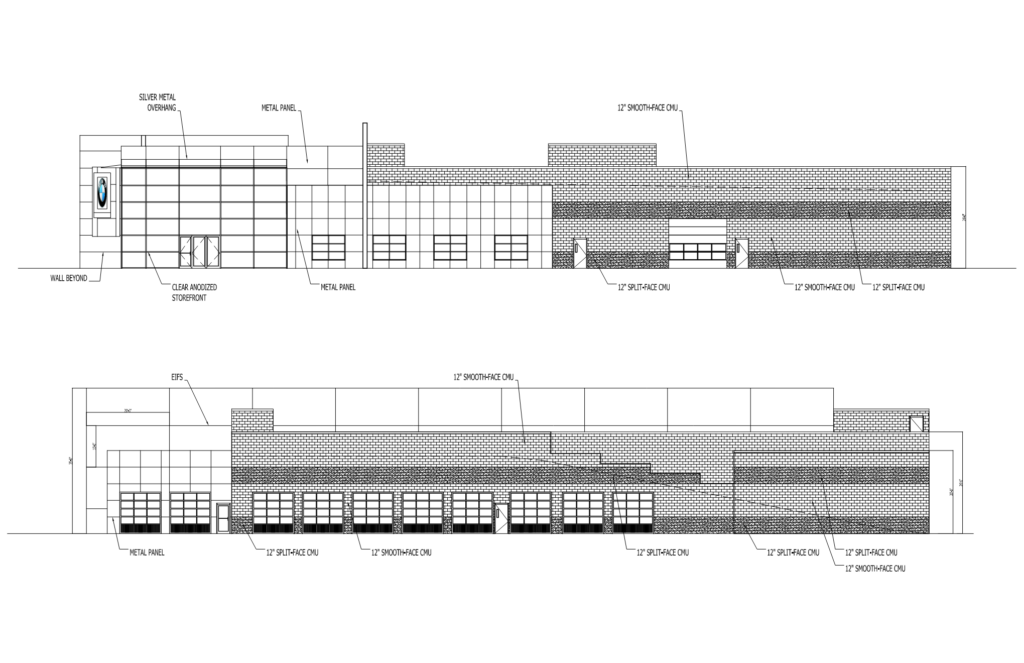
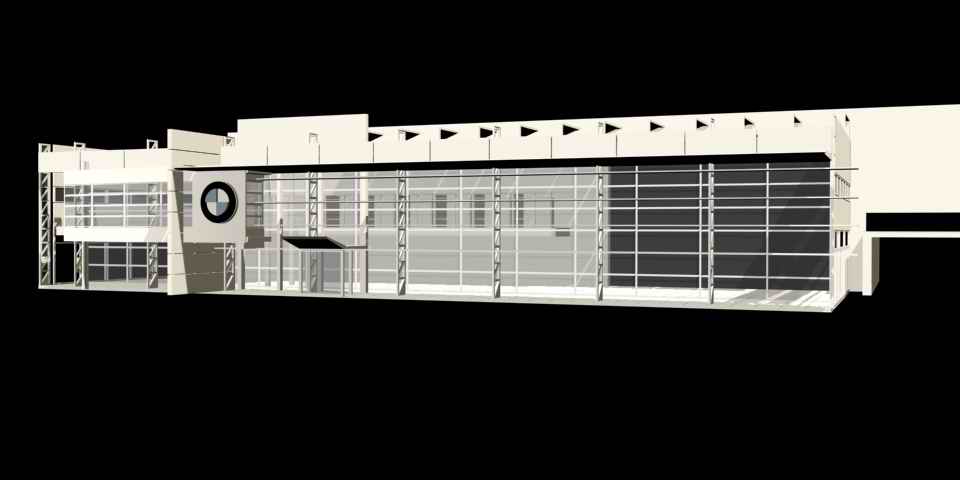
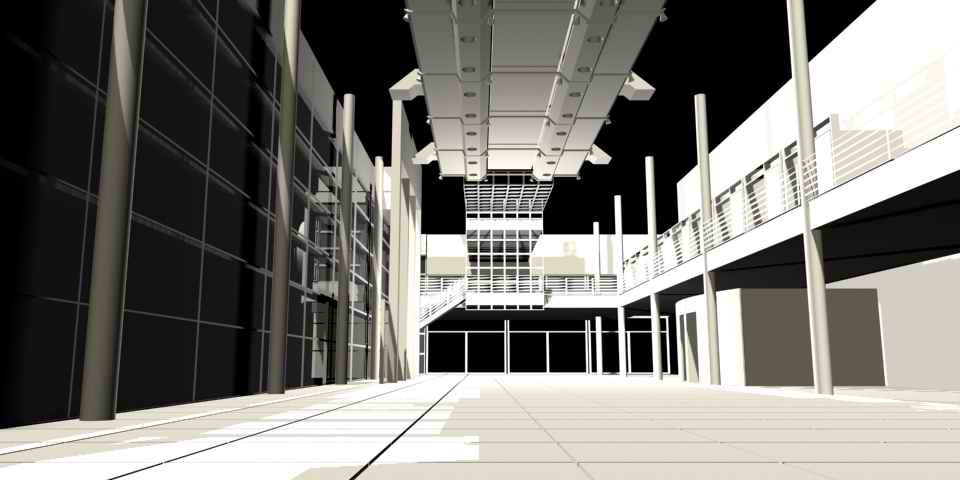
The material palette for the Passport BMW renovation and addition was selected to align with BMW’s corporate architectural standards, including the principles of its “Retail.Next” dealership concept, which emphasizes transparency, flexibility, and a premium customer experience. Concrete masonry units (CMU) form the backbone of the building envelope, providing structural integrity, fire resistance, and long-term performance—particularly critical in service and operational areas. The use of both smooth-face and split-face CMU introduces subtle texture and scale while maintaining the restrained, utilitarian character prescribed by BMW facility guidelines. In customer-facing areas, clear anodized aluminum storefront systems were employed to maximize transparency and daylight, reinforcing “Retail.Next’s” focus on openness and visual connection between interior and exterior spaces. Metal panel cladding was integrated to unify the renovated and new construction, delivering crisp lines, consistent finishes, and a contemporary expression consistent with BMW’s evolving global dealership identity.
Collaboration with Chesapeake Contracting Group
Penney Design Group worked closely with Chesapeake Contracting Group, the general contractor for the Passport BMW project. Chesapeake’s experience with complex renovation and addition projects—particularly in occupied commercial environments—was instrumental to the project’s success.
With decades of experience across automotive, retail, and commercial sectors, Chesapeake Contracting Group brought a disciplined, collaborative approach to construction management. Their ability to carefully phase work, coordinate trades, and maintain safety standards allowed the dealership to remain operational while construction progressed. The partnership between design and construction teams ensured challenges were addressed proactively, resulting in a high-quality finished project that met both schedule and performance goals.
A Modernized Dealership for the Future
The completed Passport BMW project reflects the power of integrated design and construction. By modernizing customer spaces and expanding the facility through a carefully executed addition, the dealership is now better equipped to serve its customers while reinforcing the BMW brand experience.
At Penney Design Group, we value projects that require thoughtful coordination, technical expertise, and strong collaboration—and Passport BMW stands as a testament to that approach.